
The Ultimate Guide to Racing Arcade Machines: History, Buying, & Top Models
This comprehensive guide explores the world of racing arcade machines, covering their evolution from 1960s electro-mechanical roots to modern VR simulators. It provides actionable buying advice for home enthusiasts and commercial operators, detailed maintenance tips, and insights into future trends, leveraging expert industry data and historical analysis.
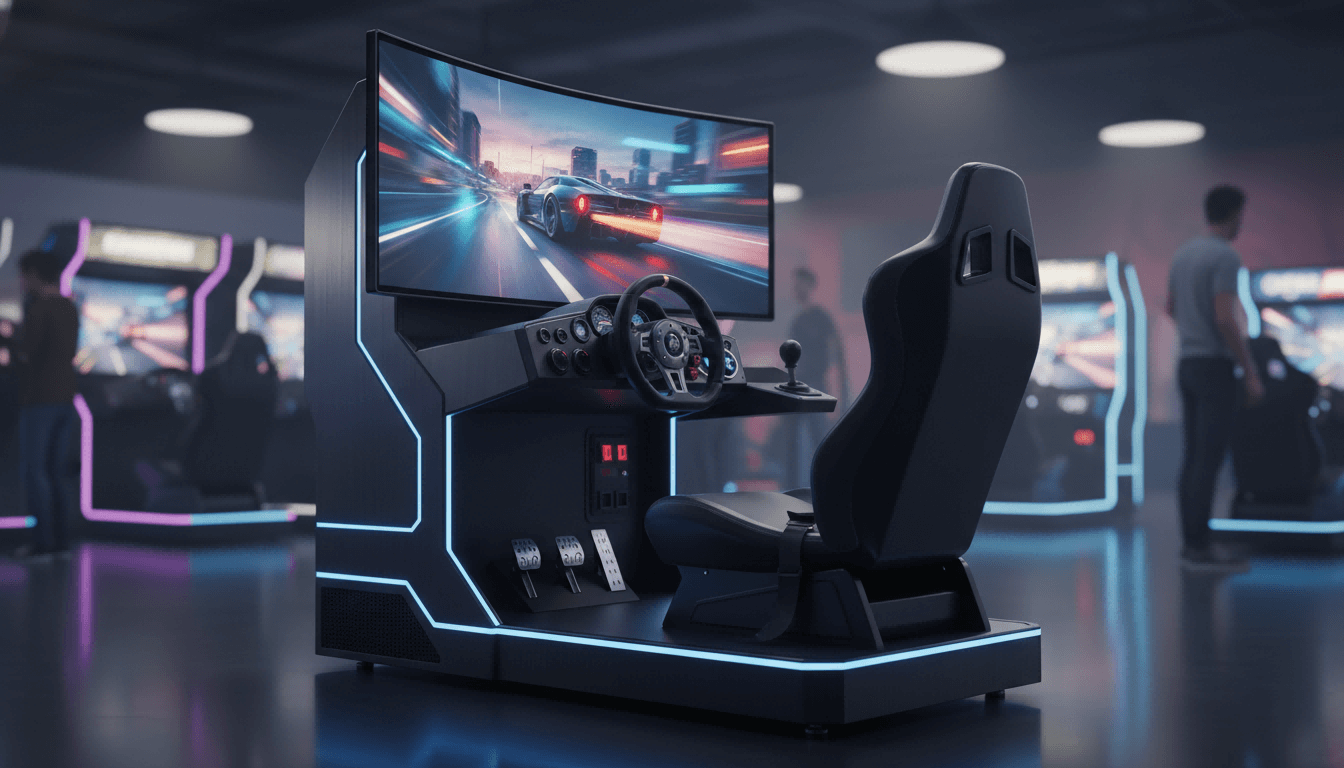
Introduction: The Enduring Thrill of Racing Arcade Machines
There is a specific, visceral thrill that only a Racing Arcade Machine can deliver. It’s the weight of a force-feedback steering wheel fighting your grip, the rumble of a subwoofer beneath a bucket seat, and the neon glow of a leaderboard daring you to shave a fraction of a second off your lap time. Whether you are a nostalgic gamer looking to recreate the 90s in your basement or a business owner aiming to boost foot traffic, the appeal of arcade racing is timeless and universal.
In this guide, we will accelerate through the history of these machines, dissect the technology that makes them immersive, and provide a detailed buyer’s roadmap. Drawing on 18 years of manufacturing experience from Guangzhou DINIBAO Animation Technology Co., Ltd., and backed by industry data, we will help you navigate the market confidently.
A Trip Down Memory Lane: The Evolution of Racing Arcade Machines
The journey of the arcade racer is a history of technological ambition. Before pixels took over, the genre was defined by mechanical ingenuity.
From Electro-Mechanical Wonders (1960s-1970s)
Long before digital graphics, manufacturers used physical props to simulate speed. The "electro-mechanical" (EM) era featured machines like Grand Prix and Speedway (1969), which used rear-projection and scrolling drums to create the illusion of movement. These machines laid the groundwork for the industry, proving that players craved the physical sensation of driving [1].
The Golden Age: Digital Dominance (1980s-1990s)
The 1980s introduced digital scaling and 3D polygons. Pole Position (1982) became the gold standard, earning massive revenue and popularizing the qualifying lap mechanic. However, the 1990s truly defined the genre. Sega’s Daytona USA (1994) didn't just look better with its texture-mapped polygons; it felt better. It became one of the highest-grossing arcade games of all time, largely due to its linked multiplayer capabilities, which allowed up to eight players to race simultaneously—a feature that remains a staple in modern arcades [2].
The Modern Era: Immersion and VR (2000s-Present)
Today, the focus has shifted from graphical leaps to sensory immersion. Titles like Mario Kart Arcade GP brought franchise power, while recent innovations have integrated Virtual Reality (VR). Modern cabinets now often feature motion platforms that tilt and roll with the track, a technology that companies like DINIBAO have refined for their global export markets.
Understanding Racing Arcade Machines: More Than Just a Game
Unlike a home console controller, a racing arcade machine is a physical simulator. The difference lies in the hardware integration.
Key Components
· Force Feedback Steering: This isn't just vibration; it's a motor resisting your turn to simulate tire grip and road texture.
· Pedals and Shifters: Heavy-duty metal components designed to withstand millions of stomps.
· The Cabinet (Cab): Ranging from "Upright" (standing) to "Sit-Down" (cockpit) and "Motion Deluxe" (hydraulics).
At DINIBAO, we see this firsthand. Having exported to over 180 countries, we understand that the "soul" of the machine is in its durability and feedback accuracy. A flimsy wheel ruins the illusion, which is why professional-grade machines prioritize industrial-strength components.
The Ultimate Buyer's Guide: Finding Your Perfect Racing Arcade Machine
Whether you are building a "man cave" or outfitting a Family Entertainment Center (FEC), the buying criteria differ vastly.
For Home Enthusiasts
· Space & Power: A standard sit-down driver measures roughly 30" wide by 65" deep. Ensure your doorways can accommodate the cabinet, or ask if it ships disassembled.
· Budget:
o Entry-Level ($500 - $1,500): Often 1Up scale replicas or basic conversions.
o Mid-Range ($2,000 - $4,500): Refurbished classics like Cruis'n World or newer imported models.
o Premium ($5,000+): Full-motion simulators or rare vintage restorations.
· Customization: Many enthusiasts buy racing arcade machines for sale with the intent to mod them. Installing a PC inside an old cabinet to run MAME is a popular project, allowing you to play hundreds of racing titles on one cabinet.
For Commercial Operators (Arcades & FECs)
If you are running a business, your primary metric is ROI (Return on Investment).
· Revenue Potential: According to industry reports, arcade games can account for 30-50% of an FEC's total revenue [3]. A high-quality racing simulator can break even in 6-12 months depending on foot traffic.
· One-Stop Solutions: Purchasing isolated machines can lead to disjointed support. DINIBAO emphasizes a "one-stop purchasing solution." We don't just sell a machine; we offer project analysis and floor planning. For a new arcade, having a unified theme and a reliable supplier for spare parts is critical for minimizing downtime.
· Durability: Commercial machines must survive "rage quitting" and excited children. Look for cabinets made from moisture-resistant wood or metal, with easily accessible service panels.
Top Racing Arcade Machine Models & Franchises
Classic Icons
· Daytona USA (Sega): The undisputed king of multiplayer racing.
· Out Run (Sega): Famous for its Ferrari license and "choose your own path" gameplay.
· Ridge Racer (Namco): The game that taught us how to drift.
Modern Powerhouses
· Mario Kart Arcade GP DX: Perfect for families. The "Nam-Cam" feature (taking a photo of your face) adds a layer of personalization that drives repeat plays.
· Fast & Furious Arcade: Capitalizes on movie franchise recognition, drawing in casual players who might not be "gamers."
· DINIBAO Racing Series: Our own line of machines focuses on high-reliability hardware and immersive motion seats, designed specifically to compete with major franchises at a competitive price point.
Maximizing Your Racing Arcade Machine Experience
Optimal Setup
For home users, lighting is key. Dim the room and add LED strips behind the cabinet to match the game's attract mode colors. For commercial venues, place racing games in pairs or sets of four. Racing is inherently social; a single machine earns significantly less than a bank of linked units where friends can challenge each other.
Community & Competitive Play
Join forums like ArcadeControls or KLOV. For commercial operators, hosting weekly "Time Attack" tournaments can build a loyal community. DINIBAO has seen this strategy work in many of the 10,000+ game centers using our machines—competition drives coin drop.
Maintaining Your Investment: Tips for Longevity
"Quality is the life," as our company motto states, but even the best machines need care.
1. Dust is the Enemy: Vacuum the interior PC/board fans monthly. Overheating is the #1 cause of hardware failure.
2. Control Calibration: Steering potentiometers wear out. If a car pulls to the left, recalibrate the pot or replace it. DINIBAO provides support for sourcing these specific parts for our clients.
3. Monitor Care: For CRT monitors (vintage), avoid leaving static images on for hours to prevent burn-in. For modern LCDs, ensure the protective glass is cleaned daily with non-ammonia cleaners.
The Road Ahead: Future Trends in Racing Arcade Gaming
The market is evolving toward hyper-reality. We are seeing a surge in VR Racing Simulators where the player wears a headset, and the motion platform reacts to G-forces. The global arcade gaming market is projected to grow, driven significantly by VR and LBE (Location-Based Entertainment) innovations [4].
Furthermore, sustainability is becoming a factor. Newer machines use energy-efficient LED lighting and screens, reducing the operating cost for business owners.
Conclusion: The Unyielding Appeal of the Racing Arcade Machine
From the clanking electro-mechanical gears of the 1960s to the 4K VR experiences of today, racing arcade machines have remained a pinnacle of gaming entertainment. They offer a physical connection to the digital world that no gamepad can replicate.
Whether you are a home buyer looking for that perfect centerpiece or a commercial operator seeking a high-ROI attraction, the key is to choose quality and reliability. With 18 years of experience and a global footprint, DINIBAO stands ready to help you cross the finish line.
FAQ
What is the average cost of a racing arcade machine?
The cost varies greatly. A DIY or used project cabinet might cost $500-$1,500. New commercial-grade machines typically range from $4,000 to over $15,000 for high-end motion simulators.
Can I buy a racing arcade machine for home use?
Yes. Many distributors sell directly to consumers. However, ensure you have adequate space (approx. 30 sq. ft. per machine) and check if the unit can be disassembled to fit through standard residential doors.
What are the most iconic racing arcade games of all time?
Daytona USA, Out Run, Pole Position, and Cruis'n USA are widely considered the most influential. Modern classics include Mario Kart Arcade GP.
How do racing arcade machines provide an immersive experience?
They utilize force-feedback steering wheels, surround sound systems, and often hydraulic or electric motion platforms to simulate the physical forces of driving, such as bumps, crashes, and acceleration.
What's the difference between a racing arcade machine and a home racing simulator?
Arcade machines are built for durability and "pick-up-and-play" simplicity with dedicated cabinets. Home simulators often use consumer PCs/consoles and require more technical setup but offer deeper simulation software (like iRacing).
How do I maintain my racing arcade machine?
Regularly clean the dust from air vents and fans, wipe down the steering wheel and shifter to prevent grime buildup, and check pedal springs for tension. Commercial operators should schedule monthly technical check-ups.
What are the latest technologies used in modern racing arcade machines?
Virtual Reality (VR), 4K resolution displays, air-bladder G-force seats, and cloud-connected leaderboards for global competition.
Are racing arcade machines a good investment for commercial venues?
Yes. They are high-traffic attractions that appeal to all ages. Linked racers encourage group play, significantly increasing revenue per square foot compared to single-player games.
References
[1] Electro-mechanical game History
[2] Daytona USA Arcade History
Recommended for you
hammer machine
Can the game difficulty be adjusted?
Yes! You can calibrate the scoring sensitivity and impact threshold in the settings to make the game easier or more challenging.
Global Tour
What is the warranty period for Global Tour?
Global Tour comes with a 12-month warranty, covering both parts and labor.
Game Play
How do kids earn rewards?
By finishing races and scoring higher, they earn more tickets to redeem for prizes.
Prize Machine
Can the machine be customized with our logo or colors?
Yes, we support OEM services for branding, colors, and prize customization.
Speed Motor
Is Speed Motor safe for young kids?
Absolutely. The cabinet has soft edges, child-sized controls, and a stable design.
car baby racing
Can the machine be customized?
Yes. We offer customization for branding, themes, and difficulty levels.
You May Also Like
Get in Touch with us
If you are interested in our products and services, please leave us messages here to know more details.
We will reply as soon as possible.

 Scan QR Code
Youtube
Guangzhou DiniBao Animation Technology Co., Ltd
Guangzhou Dinibao Animation Technology Company Co., Ltd