
The Ultimate Guide to Car Racing Arcade Game Machines: History, Buying, & Future Trends 2026+
A comprehensive 2026 guide to car racing arcade game machines, covering their evolution, commercial pricing, future VR trends, and essential buying advice for maximizing ROI.
The arcade gaming market is experiencing a massive resurgence, with the global industry valued at $13.61 billion in 2024 and projected to reach $16.11 billion by 2029. Car racing arcade game machines remain the heartbeat of this growth, offering high-octane thrills that home consoles simply cannot match.
Whether you are a Family Entertainment Center (FEC) operator looking to boost ROI or a collector building the ultimate game room, this guide covers everything from hardware specifications to future technologies like VR and haptics.
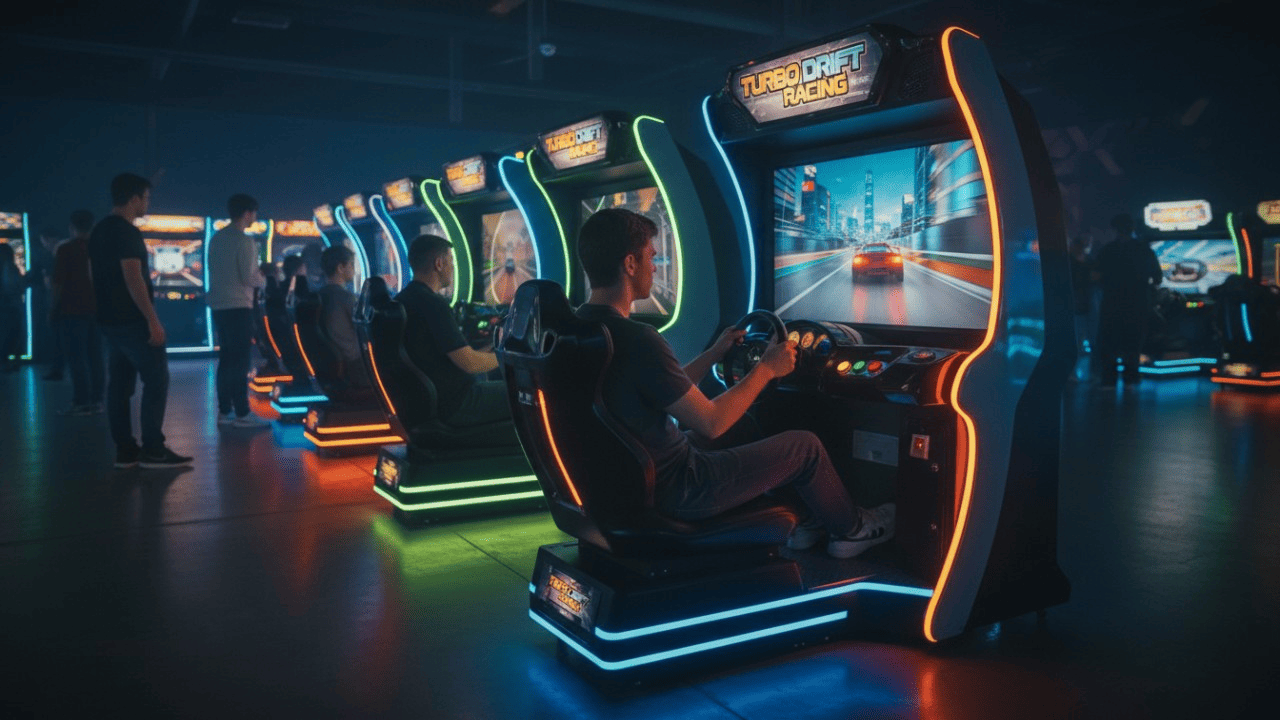
What Are Car Racing Arcade Game Machines?
Car racing arcade game machines are interactive entertainment systems designed to simulate the physical sensation of driving a vehicle in a competitive environment.
Unlike standard video games, these machines utilize specialized hardware—including steering wheels, pressure-sensitive pedals, gear shifters, and often hydraulic motion platforms—to create a visceral connection between the player and the digital track. They range from compact upright cabinets suitable for casual play to massive multi-screen simulators used in professional training and high-end amusement parks.
Key Takeaways: Your Fast Track to Racing Arcade Fun
- Market Growth: The sector is growing at a CAGR of 4.2%, driven by demand for social, out-of-home entertainment.
- Investment Range: Commercial-grade machines typically cost between $2,000 and $30,000+, depending on features like motion platforms.
- Revenue Potential: A well-placed racing machine can generate $200 to $485 per week in revenue.
- Tech Trends: 2026 will see a surge in VR integration and haptic feedback suits that simulate G-forces.
- Supplier Importance: Success depends heavily on after-sales support and parts availability, a key strength of established manufacturers like DINIBAO.
The Thrilling Evolution of Racing Arcade Games
The history of arcade racing is a timeline of technological breakthroughs, moving from mechanical projection to hyper-realistic simulation.
- The Early Days (1970s): The genre began with electro-mechanical marvels like Gran Trak 10, which used simple diode-transistor logic to simulate the track, laying the foundation for all future driving games.
- The Golden Age (1980s): CPU-based systems revolutionized the industry. Games like Pole Position and Out Run introduced scaling sprites and colorful graphics, defining the arcade aesthetic for a generation.
- 3D Revolution (1990s): This era brought the biggest leap with texture-mapped polygons. Titles like Virtua Racing and Daytona USA set the standard for multiplayer linking, allowing up to eight players to race simultaneously.
- Modern Era (2000s-Present): Today's machines, such as Mario Kart Arcade GP DX and Cruis'n Blast, blend IP recognition with HD displays and motion seats, focusing on accessible, high-energy fun.
Types of Car Racing Arcade Machines: Finding Your Perfect Ride
Choosing the right machine type depends entirely on your available floor space, budget, and target audience.
- Upright Cabinets:
- Definition: Tall, narrow units where the player stands or leans.
- Best For: Locations with limited floor space (approx. 10-15 sq. ft.).
- Sit-Down/Cockpit Models:
- Definition: Enclosed or semi-enclosed units with a dedicated racing seat.
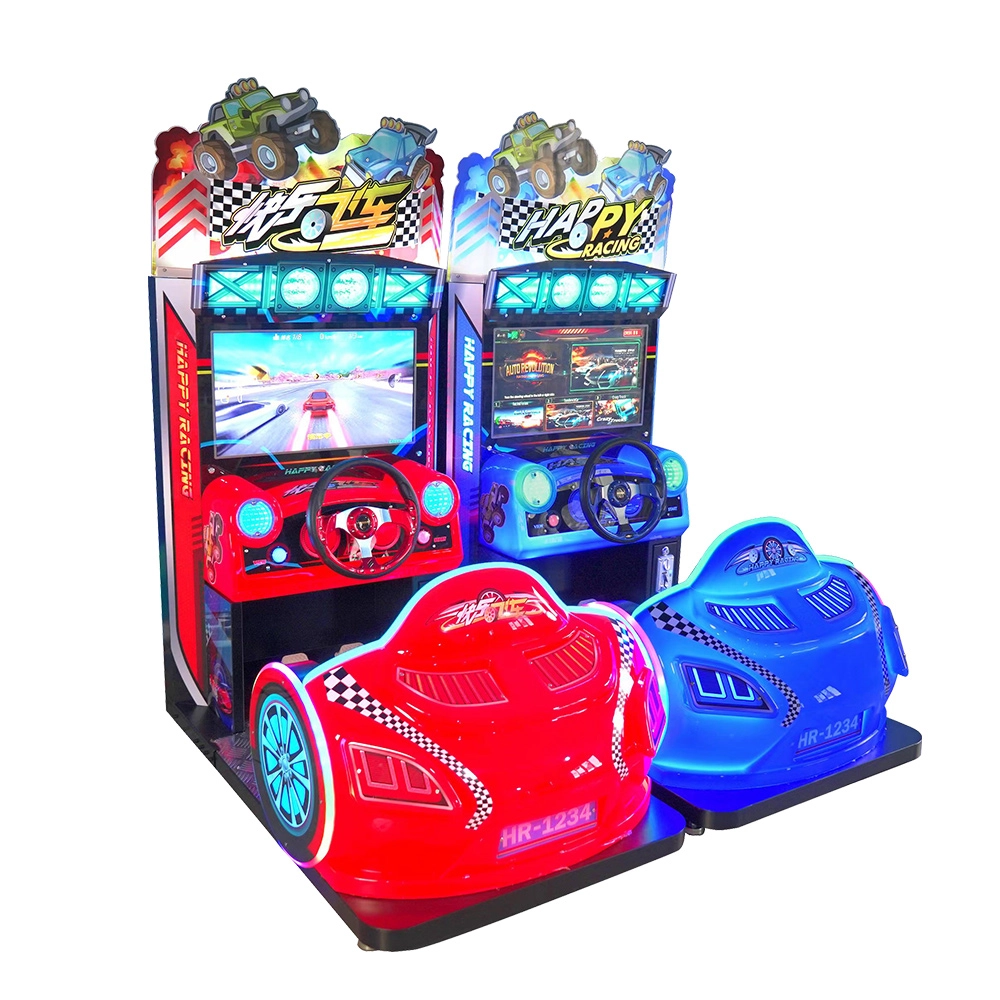
- Best For: Creating a "destination" feel; these are the standard for most modern arcades.
- Motion Platform Simulators:
- Definition: High-end units using hydraulic or electric actuators to move the seat in sync with the game (pitch, roll, and yaw).
- Best For: Premium venues charging higher price-per-play.
- VR-Enhanced Experiences:
- Definition: Machines integrated with VR headsets and motion feedback.
- Best For: Attracting Gen Z players seeking immersion; creates a "spectacle" that onlookers want to try.
Top Car Racing Arcade Game Machines & Simulators for 2026+
To maximize engagement, operators must stock titles that balance brand recognition with replayability.
- Cruis'n Blast: A staple in modern arcades, known for its vibrant neon graphics and over-the-top stunts. It consistently ranks high in earnings due to its casual appeal.
- Daytona USA 3: The latest iteration of the legend, bringing nostalgia to older players while offering modern mechanics for new racers.
- Mario Kart Arcade GP DX: The ultimate family magnet. Its co-op modes and recognizable characters make it a safe, high-earning bet for any FEC.
- Fast & Furious: SuperCars: Capitalizes on the massive movie franchise, offering deep customization and "save data" features that encourage repeat visits.
- Next-Gen Force Feedback Simulators: Looking ahead to 2026, expect unbranded "pro-sumer" rigs that use direct-drive wheels and 4K screens to offer simulation-level physics for hardcore enthusiasts.
Essential Features for an Unforgettable Racing Experience
A machine is only as good as the feedback it provides to the player.
- Realistic Controls: Look for Force Feedback steering wheels that fight back during turns. Cheap spring-loaded wheels feel like toys and reduce repeat play.
- Visual Immersion: Multi-screen setups (triple monitors) or curved 4K displays are becoming the standard to provide a wide field of view (FOV).
- Sensory Feedback: Beyond seat vibration, premium machines now include air blowers (to simulate wind speed) and surround sound speakers in the headrest.
- Linkage Systems: The ability to link 2-8 machines is critical. Data shows that multiplayer races significantly increase dwell time and "social spending" groups.
The Ultimate Buyer's Guide: Investing in a Racing Arcade Machine
Investing in arcade hardware requires a clear understanding of total cost of ownership (TCO) and return on investment (ROI).
1. New vs. Used: Pros, Cons, and Value
- New Machines: Come with warranties (typically 1 year) and pristine screens. Essential for high-traffic commercial zones.
- Used Machines: Can save you 40-60%, but often require immediate maintenance on moving parts like pedals and steering belts.
2. Understanding Pricing: What Influences Cost (Addressing the Gap)
Lack of transparent pricing is a common frustration. Based on 2024-2025 market data:
- Entry-Level / Home Units: $500 – $2,000 (Basic controls, smaller screens).
- Mid-Range Commercial: $2,800 – $8,000 (e.g., standard Cruis'n Blast or Mario Kart units).
- High-End Motion Simulators: $10,000 – $30,000+ (Full motion platforms, VR integration, triple-screen setups).
- Note: Always factor in shipping and installation, which can add $500-$1,500 depending on weight.
3. Maintenance & ROI
- Maintenance: Budget $100-$500 annually per machine for parts like potentiometers, belts, and buttons.
- ROI: With average earnings of $200-$485/week, a mid-range machine can pay for itself in 6-12 months. High-traffic locations (malls, boardwalks) report weekly earnings exceeding $1,100.
Expert Tips for Maximizing Your Racing Arcade Machine Investment
Experienced operators know that buying the machine is just step one.
- Strategic Placement: Place racing games in pairs or quads near the entrance. The sound of a race attracts attention immediately.
- Tournament Play: Use the "Linkage" feature to host weekly tournaments. This builds a community of regulars who compete for high scores.
- Test Drive Before You Buy: If possible, visit a showroom. The "feel" of the steering and pedals is the #1 factor in player satisfaction.
- Partner with Experience: Companies like DINIBAO leverage 18 years of manufacturing experience to guide buyers not just on the hardware, but on floor planning and profit analysis.
Common Mistakes to Avoid When Buying Racing Arcade Machines
- Ignoring Door Widths: These machines are massive. Always measure your facility's entryways against the machine's dimensions (often listed in the manual).
- Underestimating Power Needs: High-end motion simulators draw significant power. Ensure your venue has the correct voltage and amperage to avoid tripping breakers.
- Overlooking After-Sales Support: A broken machine earns $0. Buying from "cheap" unverified sources often means no spare parts. Stick to suppliers with a proven global track record.
Choosing the Right Supplier: A Critical Decision for Quality and Support
The difference between a profitable arcade and a maintenance nightmare often lies in the supplier you choose.
When selecting a partner, look for Experience and Global Reach.
- Proven Track Record: Companies like Guangzhou Dinibao Animation Technology Co., Ltd. have specialized in manufacturing and exporting for 18 years. This longevity is a proxy for reliability.
- Global Support Network: With machines exported to over 180 countries and branch offices in regions like the UK, India, and Chile, DINIBAO exemplifies the level of infrastructure needed to support 10,000+ game centers worldwide.
- One-Stop Solutions: Don't just buy a box. Look for suppliers who offer market research, decoration design, and operation management. A "one-stop" provider helps you design the entire layout to maximize flow and revenue, adhering to the policy that "Quality is the life" of the business.
The Future of Car Racing Arcade Games: What to Expect in 2026 and Beyond
The arcade industry is not slowing down; it is evolving into a high-tech experiential hub.
- Advanced Haptics: By 2026, expect "haptic suits" and vests to become common accessories for premium racing setups, allowing players to feel the G-force of a turn or the rumble of the engine.
- Hybrid FEC Models: Venues will increasingly merge arcades with trampolines and cafes. Racing simulators will serve as the "anchor" attractions in these multi-use spaces.
- Cashless Integration: Over 80% of locations are expected to be fully cashless by 2025, using NFC cards that track player stats and high scores globally.
- Subscription Content: Future machines may stream new tracks and cars from the cloud, keeping the gameplay fresh without requiring expensive hardware upgrades.
FAQ
What is the most popular racing arcade game? Historically, Daytona USA is the king. However, in modern arcades (2024-2025), Mario Kart Arcade GP DX and Cruis'n Blast are the top earners due to their broad appeal.
How much does a commercial racing arcade machine cost? Prices range widely. A standard new commercial unit costs between $2,800 and $8,000. High-end motion simulators used in premium venues can cost $20,000 to $40,000.
Can I put an arcade racing machine in my home? Yes. Many manufacturers offer "home" versions or upright cabinets that fit through standard doors. Ensure you have about 15-20 sq. ft. of space and standard power outlets.
Is it better to buy a new or used racing arcade machine? For commercial use, new is recommended for the warranty and reliability. For home use, a used machine is a great cost-saving option, provided you are comfortable with minor DIY repairs.
Recommended for you
Cupid's Arrow
What is the warranty period for Cupid's arrow?
Cupid's arrow comes with a 12-month warranty, covering both parts and labor.
Is Cupid's arrow suitable for all ages?
Yes, Cupid's arrow is designed to be family-friendly and is suitable for players aged 5 and above.
beat beans
Can the machine be set to single or multiplayer mode?
Yes, Beat Beans supports both single-player and two-player modes for competitive or solo play.
Train Baby
What age group is Train Baby best for?
Recommended for children aged 4–10 years.
children's category
Do you provide installation or user guidance?
Yes, we provide detailed English manuals, operation videos, and online technical support to help with setup and troubleshooting.
Happy Rider
How does the machine start?
It can be activated by coin insertion or QR code scan.
You May Also Like
Get in Touch with us
If you are interested in our products and services, please leave us messages here to know more details.
We will reply as soon as possible.

 Scan QR Code
Youtube
Guangzhou DiniBao Animation Technology Co., Ltd
Guangzhou Dinibao Animation Technology Company Co., Ltd